False Alarm Investigations –
Few issues frustrate businesses more than recurring fire alarm false alarms.
A single unwanted activation can disrupt operations, interrupt customer service and create inconvenience for staff. When false alarms begin occurring regularly, the consequences become far more significant. Productivity suffers, confidence in the system can decline and building occupants may become complacent when alarms sound.
Across Shipley, commercial premises of all types occasionally experience false alarm issues. However, the most effective solution is rarely simply replacing a detector or resetting the panel. Successful long-term resolution requires a structured investigation that identifies the true cause of the problem.
Treating symptoms without addressing the underlying issue often results in the same problem returning weeks or months later.
What Is a False Alarm?
A false alarm occurs when a fire alarm system enters an alarm condition despite there being no actual fire.
This does not necessarily mean the system has malfunctioned.
In many cases, the alarm has activated correctly in response to environmental conditions that resemble fire indicators.
Examples include:
• Dust
• Steam
• Aerosols
• Construction works
• Cooking fumes
• Insect ingress
• Excessive airborne particles
Understanding exactly what triggered the activation is the first step towards preventing future occurrences.
Why Repeated False Alarms Matter
Some businesses view occasional false alarms as an unavoidable inconvenience.
However, recurring activations can create several problems:
• Operational disruption
• Staff frustration
• Customer inconvenience
• Reduced confidence in alarm signals
• Increased maintenance costs
• Unnecessary investigations
Over time, occupants may begin assuming alarms are not genuine, which can undermine evacuation procedures during a real emergency.
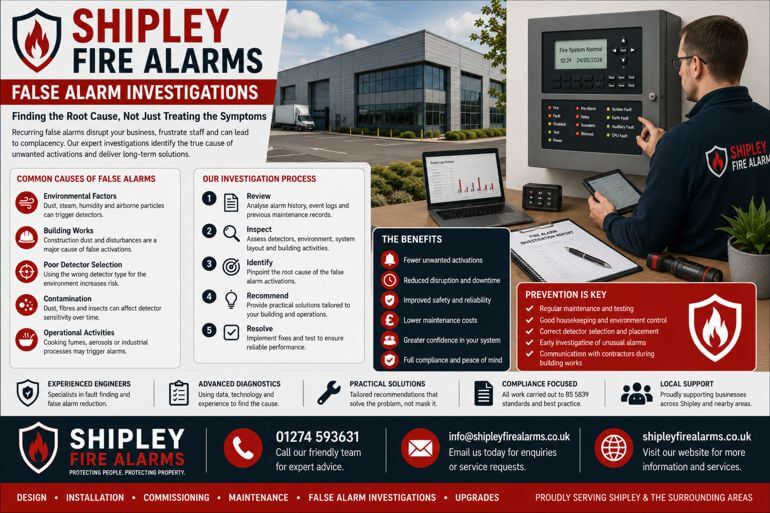
Common Causes of Commercial False Alarms
Every building is different, but several causes appear regularly during investigations.
These include:
Environmental Factors
Changes in airflow, temperature or humidity can affect detector performance.
Building Works
Construction dust remains one of the most common causes of temporary false alarms.
Poor Detector Selection
Using the wrong detector type for a specific environment can increase unwanted activations.
Contamination
Dust, fibres and airborne debris may gradually affect detector sensitivity.
Operational Activities
Processes within warehouses, workshops or commercial kitchens can sometimes trigger detectors if system design has not fully considered the environment.
The Importance of Investigation
Simply replacing a detector rarely guarantees a permanent solution.
A professional false alarm investigation examines:
• Activation history
• Device location
• Building usage
• Environmental conditions
• Detector type
• Maintenance records
• Occupancy patterns
By reviewing the wider context, engineers can identify patterns that may not be immediately obvious.
Using Fire Alarm Event Logs
Modern addressable fire alarm systems store extensive event information.
These records can provide valuable insight into:
• Activation frequency
• Device locations
• Time patterns
• Fault conditions
• Environmental influences
Analysing event history often helps narrow down potential causes and allows corrective action to be targeted more effectively.
Potential Solutions
The appropriate solution depends entirely on the findings of the investigation.
Corrective measures may include:
• Detector replacement
• Detector relocation
• Alternative detector technology
• Improved housekeeping
• Environmental controls
• Enhanced maintenance
• Building process changes
The objective is always to maintain effective fire detection whilst reducing unwanted activations.
Prevention Is Better Than Cure
The most effective approach to false alarm management is prevention.
Businesses can reduce risk through:
• Regular maintenance
• Good housekeeping
• Proper detector selection
• Contractor management during building works
• Early investigation of unusual activations
Addressing issues promptly often prevents minor concerns developing into recurring problems.
Supporting Compliance and Safety
False alarm reduction should never compromise fire protection.
Any changes to detector types, locations or system configuration should be carefully assessed by competent fire alarm specialists.
The goal is to improve reliability whilst maintaining full compliance with fire safety requirements.
Commercial Fire Alarm Services in Shipley
At Shipley Fire Alarms, we provide professional fire alarm servicing, maintenance, fault finding and false alarm investigation services for commercial premises throughout Shipley and the surrounding areas.
Our experienced engineers can identify the underlying causes of recurring false alarms and recommend practical solutions that improve reliability without compromising fire safety.
Few issues frustrate businesses more than recurring fire alarm false alarms.
A single unwanted activation can disrupt operations, interrupt customer service and create inconvenience for staff. When false alarms begin occurring regularly, the consequences become far more significant. Productivity suffers, confidence in the system can decline and building occupants may become complacent when alarms sound.
Across Shipley, commercial premises of all types occasionally experience false alarm issues. However, the most effective solution is rarely simply replacing a detector or resetting the panel. Successful long-term resolution requires a structured investigation that identifies the true cause of the problem.
Treating symptoms without addressing the underlying issue often results in the same problem returning weeks or months later.
What Is a False Alarm?
A false alarm occurs when a fire alarm system enters an alarm condition despite there being no actual fire.
This does not necessarily mean the system has malfunctioned.
In many cases, the alarm has activated correctly in response to environmental conditions that resemble fire indicators.
Examples include:
• Dust
• Steam
• Aerosols
• Construction works
• Cooking fumes
• Insect ingress
• Excessive airborne particles
Understanding exactly what triggered the activation is the first step towards preventing future occurrences.
Why Repeated False Alarms Matter
Some businesses view occasional false alarms as an unavoidable inconvenience.
However, recurring activations can create several problems:
• Operational disruption
• Staff frustration
• Customer inconvenience
• Reduced confidence in alarm signals
• Increased maintenance costs
• Unnecessary investigations
Over time, occupants may begin assuming alarms are not genuine, which can undermine evacuation procedures during a real emergency.
Common Causes of Commercial False Alarms
Every building is different, but several causes appear regularly during investigations.
These include:
Environmental Factors
Changes in airflow, temperature or humidity can affect detector performance.
Building Works
Construction dust remains one of the most common causes of temporary false alarms.
Poor Detector Selection
Using the wrong detector type for a specific environment can increase unwanted activations.
Contamination
Dust, fibres and airborne debris may gradually affect detector sensitivity.
Operational Activities
Processes within warehouses, workshops or commercial kitchens can sometimes trigger detectors if system design has not fully considered the environment.
The Importance of Investigation
Simply replacing a detector rarely guarantees a permanent solution.
A professional false alarm investigation examines:
• Activation history
• Device location
• Building usage
• Environmental conditions
• Detector type
• Maintenance records
• Occupancy patterns
By reviewing the wider context, engineers can identify patterns that may not be immediately obvious.
Using Fire Alarm Event Logs
Modern addressable fire alarm systems store extensive event information.
These records can provide valuable insight into:
• Activation frequency
• Device locations
• Time patterns
• Fault conditions
• Environmental influences
Analysing event history often helps narrow down potential causes and allows corrective action to be targeted more effectively.
Potential Solutions
The appropriate solution depends entirely on the findings of the investigation.
Corrective measures may include:
• Detector replacement
• Detector relocation
• Alternative detector technology
• Improved housekeeping
• Environmental controls
• Enhanced maintenance
• Building process changes
The objective is always to maintain effective fire detection whilst reducing unwanted activations.
Prevention Is Better Than Cure
The most effective approach to false alarm management is prevention.
Businesses can reduce risk through:
• Regular maintenance
• Good housekeeping
• Proper detector selection
• Contractor management during building works
• Early investigation of unusual activations
Addressing issues promptly often prevents minor concerns developing into recurring problems.
Supporting Compliance and Safety
False alarm reduction should never compromise fire protection.
Any changes to detector types, locations or system configuration should be carefully assessed by competent fire alarm specialists.
The goal is to improve reliability whilst maintaining full compliance with fire safety requirements.
Commercial Fire Alarm Services in Shipley
At Shipley Fire Alarms, we provide professional fire alarm servicing, maintenance, fault finding and false alarm investigation services for commercial premises throughout Shipley and the surrounding areas.
Our experienced engineers can identify the underlying causes of recurring false alarms and recommend practical solutions that improve reliability without compromising fire safety.
Whether you operate offices, warehouses, schools, retail premises or industrial facilities, we can help ensure your fire alarm system performs exactly as intended when it matters most.