Upgrading Outdated Systems – In many commercial premises across Shipley, fire alarm systems have been in place for years — sometimes decades. While these systems may still function, they are often outdated in terms of technology, compliance and performance. Upgrading a fire alarm system is not just about replacing old equipment; it is about ensuring that the system meets current standards and provides reliable, effective protection.
One of the most common issues with older systems is limited functionality. Conventional systems installed years ago may only provide basic zone indication, making it difficult to identify the exact location of an alarm. In larger or more complex Shipley premises, this can delay response and increase disruption.
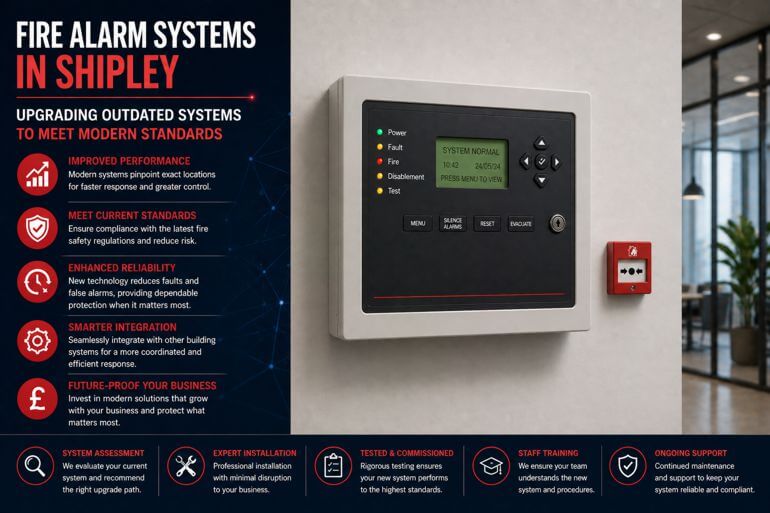
Modern fire alarm systems, particularly addressable systems, offer significantly improved performance. Each device is individually identified, allowing the system to pinpoint the exact source of an activation. This improves response times and provides greater control over the system.
Compliance is a major driver for system upgrades. Fire safety standards evolve over time, and older systems may no longer meet current requirements. In Shipley commercial properties, upgrading ensures that the system aligns with the latest regulations and reduces the risk of non-compliance.
Reliability is another key factor. As systems age, components can become less reliable, increasing the risk of faults or failures. Regular maintenance can extend the life of a system, but there comes a point where replacement becomes the more effective solution.
False alarms are often more common in older systems. Outdated detectors and limited configuration options can lead to unwanted activations. Upgrading to modern detection technology helps reduce false alarms while maintaining sensitivity to real fire conditions.
Integration is an area where older systems often fall short. Modern fire alarm systems can be linked with other building systems, such as access control, HVAC and monitoring services. This provides a more coordinated response and enhances overall fire safety.
Upgrading does not always mean a complete system replacement. In some cases, it is possible to phase upgrades, replacing key components while retaining parts of the existing system. This can help manage costs while still improving performance.
Wireless technology can also play a role in upgrades, particularly in buildings where cabling is difficult or disruptive. This allows systems to be modernised without extensive structural work.
Planning is essential when upgrading a fire alarm system. The process should begin with a comprehensive assessment of the existing system, identifying its limitations and determining the most effective upgrade path.
Installation must be carefully managed to minimise disruption to the business. In many Shipley commercial premises, work can be carried out in stages or outside of normal operating hours to reduce impact.
Testing and commissioning are critical to ensure that the upgraded system operates correctly. This includes verifying that all devices are functioning as expected and that the system responds appropriately to different scenarios.
Staff training should be updated following any upgrade. Employees need to understand how the new system operates and how to respond to alarms. This ensures that the benefits of the upgrade are fully realised.
Documentation must also be updated to reflect the new system. Accurate records support compliance and provide a clear reference for future maintenance and testing.
Regular maintenance remains essential after an upgrade. Even the most advanced systems require ongoing servicing to ensure reliability and compliance.
For businesses in Shipley, upgrading an outdated fire alarm system is an opportunity to improve safety, reduce disruption and ensure compliance with current standards. By moving to modern technology, businesses can benefit from improved detection, better control and greater reliability.
Ultimately, an upgraded system provides confidence — ensuring that when an alarm is triggered, it delivers clear, accurate and reliable information, supporting a fast and effective response.
Suite 2 - 4 Charles St
Shipley
BD17 7BL
Tel: 01274 947028